


The Complete Guide to Marketing Personalization: Using Data to Create Tailored Customer Experiences
Most marketing leaders can articulate why personalization matters. The harder problem is the gap between knowing it matters and building the systems, data infrastructure, and cross-channel coordination to make it work consistently at scale. That gap is where most brands stall, and it’s where the competitive distance between leaders and laggards widens every year.
Consumer expectations are no longer aspirational; they’re a baseline. The companies executing personalization well are generating revenue advantages that compound over time.
This guide covers the full execution path, from building a data foundation to advanced segmentation, email and website tactics, AI-powered automation, channel-specific execution, and measurement. The focus throughout is on what CMOs need to brief their teams, evaluate agency partners, and make strategic decisions that move programs from concept to operation.
Why Marketing Personalization Delivers Measurable ROI and Competitive Advantage in 2026

The business case for personalization is well-documented and consistently significant across sectors. According to BCG’s Personalization Index, personalization leaders grow revenue roughly 10 percentage points faster annually than their laggard peers. Personalization isn’t just a contributor to growth; it’s a separator between organizations that outperform and those that don’t.
The consumer side of that equation is just as clear. According to Attentive’s 2025 Consumer Trends Report, 81% of consumers ignore irrelevant marketing messages, and 1 in 4 say receiving a generic message makes them less likely to purchase. That disengagement isn’t passive. It translates directly into brand switching, reduced loyalty, and lost revenue. The margin for generic, one-size-fits-all marketing has narrowed considerably, and the brands that haven’t built personalization into their core operations are feeling it in acquisition costs and retention rates.
For CMOs, the challenge isn’t understanding why personalization matters. It’s building the systems, data infrastructure, and cross-channel execution to make it work consistently and at scale. Most organizations are somewhere in the middle: they’ve started personalizing, but they’re operating in silos, relying on demographic segments that no longer reflect how customers actually behave, or deploying personalization in one channel while ignoring the others. The gap between knowing personalization matters and building a program that compounds over time is where most brands stall.
Gains show up in conversion rates, customer lifetime value, retention, and acquisition efficiency, making personalization one of the clearest ROI opportunities for CMOs managing tight budgets and high expectations.
Building Your First-Party Data Foundation: Collection, Unification, and Privacy Compliance

Every personalization program runs on data quality. Before any segment gets built or any triggered communication goes out, there has to be a reliable, unified picture of the customer. That foundation starts with understanding the types of data available and knowing which ones to prioritize.
Zero-party data is information customers intentionally and proactively share with a brand, such as preferences submitted through quizzes, surveys, or preference centers. It can include purchase intentions, personal context, and how an individual wants a brand to recognize them. It’s the most accurate data available because it comes directly from the customer without requiring behavioral inference. First-party data captures what customers do across owned channels: website behavior, purchase history, email engagement, app activity, and CRM records. Together, these two data types form a durable foundation for personalization because they don’t depend on third-party tracking infrastructure, which continues to erode under privacy regulations.
Second-party data involves sharing or purchasing data directly from a trusted partner. Third-party data, purchased from aggregators or data marketplaces, offers scale but is the least reliable and carries the highest privacy risk. Most mature personalization programs focus on building first- and zero-party data assets over time rather than depending on sources outside their control.
The challenge most organizations hit isn’t data volume; it’s data fragmentation. Customer records sit in separate systems. The CRM holds purchase history, the email platform tracks engagement, the website analytics tool captures browsing behavior, and none of them talk to each other in real time. A customer data platform (CDP) solves this by ingesting data from every touchpoint and resolving it into a single, unified customer profile. That profile becomes the engine for personalization at every downstream channel, from email to paid media to on-site content.
Getting this infrastructure right requires buy-in beyond the marketing team. IT, data governance, and legal all have roles to play, particularly as privacy requirements tighten around consent management, data retention, and opt-out handling. CMOs who treat the data foundation as a marketing initiative alone tend to build programs that stall when compliance questions arise or when a key platform changes its data-sharing terms.
What First-Party Data Sources Drive the Most Effective Marketing Personalization?
First-party behavioral and transactional data consistently outperform other data sources in terms of personalization accuracy and business impact. Eighty-eight percent of marketers say that gathering first-party data is more important to organizations year over year. The most effective programs resolve this by unifying website behavior, email engagement history, and purchase transaction data into a single customer profile before activating personalization at the channel level, rather than attempting to personalize from siloed systems that can’t share signals in real time.
Advanced Customer Segmentation: Moving Beyond Demographics to Behavioral and Predictive Models

Demographic segmentation has always been a starting point, not a destination. Grouping customers by age, gender, or income level tells you who they are in the broadest sense, but it says very little about what they need right now, how they’re engaging with your brand, or where they are in a buying decision. Behavioral and predictive segmentation fills that gap by focusing on what customers actually do rather than who they appear to be on paper.
The practical case for moving beyond demographics comes down to specificity. A 45-year-old with a household income of $120,000 could be a first-time homebuyer, a recent empty nester, or someone refinancing after a life event. Demographic data alone can’t distinguish between them. Behavioral data can. The signals customers generate through their actions — pages visited, content downloaded, emails opened, product categories browsed — reveal intent that no demographic profile would surface.
The most effective segmentation frameworks layer multiple signals together. RFM modeling (recency, frequency, monetary value) groups customers by how recently they purchased, how often they buy, and how much they spend, creating natural tiers that drive different retention and upsell strategies. Life-stage targeting identifies customers during moments of high need and delivers messages timed to those transitions. Intent-based segmentation goes further by reading behavioral signals in real time. A customer who visits a product comparison page three times in two weeks is showing purchase intent that a monthly demographic report would never catch, but a behavioral trigger could act on within hours.
Predictive models take this further still. Rather than reacting to signals after they appear, predictive segmentation uses historical behavioral and transactional data to forecast which customers are approaching a purchase moment, which are at risk of churning, and which are most likely to respond to a specific offer. These models surface opportunities that rules-based systems miss entirely because they operate across far more variables simultaneously.
The practical barrier for most organizations is building the infrastructure to act on these signals quickly enough to make a difference. Behavioral data collected but not activated within hours often loses its value entirely. That’s why segmentation strategy and marketing technology decisions are inseparable. The segments you can execute on are only as good as the systems that feed and trigger them.
What Customer Segmentation Approach Delivers the Highest Personalization ROI?
Behavioral and predictive segmentation consistently outperforms demographic-only models on every measurable personalization metric. Companies that excel at personalization generate 40% more revenue from these activities than average players, and faster-growing companies derive significantly more of their revenue from personalization than slower-growing companies. The lift comes from reaching customers at moments of genuine relevance rather than broadcasting to assumed audience profiles that no longer reflect actual behavior or intent.
Email Marketing Personalization: Dynamic Content Strategies That Increase Opens and Revenue

Email remains the highest-ROI channel in most marketing stacks, and personalization is the primary driver of the performance gap between programs that deliver and programs that drain budget.
The most impactful personalization in email isn’t adding a first name to the subject line. It’s building a system of triggered communications that respond to what customers do rather than firing on a predetermined calendar schedule. A welcome series triggered by a new account signup, an abandoned cart sequence fired within hours of the behavior, a post-purchase follow-up timed to the natural reorder window, and a win-back campaign triggered by 90 days of inactivity each outperform batch sends because they reach customers at moments of genuine relevance.
Dynamic content takes this further by allowing a single email template to render differently for each recipient based on their segment, behavior, or profile data. A financial services brand might send one email that displays a home equity message to recent homebuyers, an auto loan offer to members who’ve browsed vehicle content, and a savings rate promotion to customers holding only a checking account. The message goes out once; the experience lands differently for each recipient. This approach reduces list fatigue while improving engagement because customers receive content that reflects where they actually are rather than where a broad campaign assumes they might be.
Subject line personalization deserves its own attention within the broader email strategy. Including a recipient’s name produces measurable open rate lifts, but more sophisticated approaches use behavioral data to personalize the subject line itself, referencing a product viewed, a category browsed, or a loyalty milestone reached. These signals make the email feel like a continuation of an existing conversation rather than an interruption.
The infrastructure requirement here is clean, accessible data. Triggered sequences and dynamic content both break down when customer data is incomplete, outdated, or siloed in a system that the email platform cannot access in real time. Before investing in sophisticated email personalization, most organizations need to audit the connection between their email platform and their customer data layer. The creative work is the easy part. The data plumbing is where programs succeed or stall.
How Much Do Companies Typically Increase Email Revenue Using Behavioral Triggers?
Triggered, behavior-based email campaigns significantly outperform scheduled batch sends on every revenue metric. According to Omnisend’s 2026 Ecommerce Marketing Report,automated emails represented just 2% of total sends but generated 30% of email-attributed revenue, earning 16 times more per send than scheduled campaigns. For brands still sending primarily scheduled batch campaigns, the revenue gap between their current program and a behavior-driven, dynamic content approach is one of the most accessible, high-return improvements in the marketing stack.
Website and Landing Page Personalization: Tailoring Experiences Based on Visitor Intent
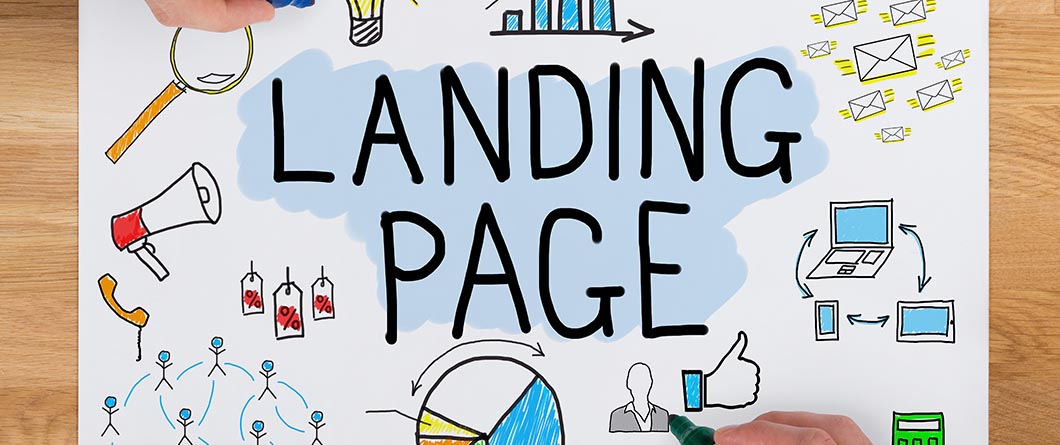
A website that shows every visitor the same experience is leaving measurable conversion volume behind. The homepage a first-time visitor sees, the landing page a returning customer lands on after clicking a retargeting ad, and the product page someone reaches after browsing a specific category three times should not look identical. Each of those visitors carries different intent signals, and the experience should reflect them.
The CTA is the clearest example of where personalization pays off on the web. HubSpot’s analysis of more than 330,000 calls-to-action found that personalized CTAs convert 202% better than default, generic versions. That gap exists because a CTA tailored to where someone is in the buying journey, what they’ve already engaged with, or what segment they belong to speaks directly to their current need. A generic “Learn More” aimed at everyone aims at no one in particular.
Beyond CTAs, website personalization operates across several layers. Homepage hero content can shift based on whether someone is a new visitor, a known contact, or an existing customer. Product recommendation modules can surface items based on browsing history or past purchases. Navigation and content blocks can be reorganized based on industry segment or persona. Each of these adjustments reduces the cognitive work a visitor has to do to find what’s relevant to them, thereby improving conversion rates and time on site.
Landing page personalization is particularly high-value for paid media. When a prospect clicks a paid search or social ad, the landing page they reach should mirror the specific message and offer from that ad as closely as possible. Message match between ad and landing page is a foundational conversion principle, and personalization technology extends it further by allowing the same destination URL to render differently based on the audience segment, keyword, or creative that drove the click. A brand running separate campaigns for two products can send both audiences to the same URL, where each sees a landing page tailored to their specific product interest.
The barrier for most organizations is the same one that appears throughout personalization work: data connectivity. Effective website personalization requires knowing something meaningful about the visitor, whether that is their segment, their behavioral history, their lead status, or the campaign that brought them. Without a clean connection between the website platform and the underlying customer data layer, personalization rules can’t fire correctly, and the experience defaults back to generic. Getting that integration right is the prerequisite for everything else.
What Revenue Lift Can Businesses Expect From Implementing Website Personalization?
Website personalization consistently delivers some of the highest conversion lifts in digital marketing optimization. HubSpot’s research across more than 330,000 calls-to-action found that personalized CTAs convert 202% better than generic default versions, meaning a visitor shown a relevant, contextual prompt is three times more likely to take action than one shown a standard button. For organizations still relying on static, one-size-fits-all landing pages and homepage experiences, that conversion gap represents direct, recoverable revenue that better data connectivity and personalization rules can capture.
Using Marketing Automation and AI to Scale Personalization Across the Customer Journey

Personalization at scale is not a manual exercise. A marketing team can craft a highly relevant experience for a few hundred customers with enough time and effort, but meaningful personalization across tens of thousands of contacts across multiple channels requires automation and AI to do the heavy lifting. According to Twilio Segment’s 2024 State of Personalization Report, over 70% of brands agree that AI adoption will fundamentally change personalization and marketing strategies, and 89% of business leaders already consider personalization critical to their success over the next three years.
The practical role of AI in marketing personalization sits across three areas. First, predictive segmentation: AI models analyze behavioral, transactional, and engagement data to identify which customers are most likely to convert, which are at risk of churning, and which are approaching a natural purchase moment. These models surface opportunities that no rules-based system could catch because they operate across far more variables simultaneously. A credit union using predictive segmentation can identify members who are statistically likely to need an auto loan in the next 60 days based on behavioral patterns, not just because they once browsed a vehicle page.
Second, real-time decisioning: AI determines in the moment which content, offer, or message a specific customer should receive based on their current context. This is what powers recommendation engines, dynamic email content, and personalized website experiences that adapt as a customer’s behavior changes. The difference between scheduled campaigns and real-time triggered personalization is the difference between reaching someone when it’s convenient for your calendar and reaching them when it actually matters to them.
Third, journey orchestration: AI manages the sequencing and timing of communications across channels, ensuring that a customer who responds to an email doesn’t receive a redundant push notification an hour later, or that someone who converts doesn’t continue receiving top-of-funnel acquisition messaging. This cross-channel coordination is where most organizations without AI still break down, even when their individual channel execution is solid.
The technology that enables all of this is the CDP operating in concert with marketing automation platforms and channel-specific tools. The strategy is only as good as the system that executes it, which is why organizations that invest in data infrastructure before personalization tooling consistently outperform those that layer personalization on top of fragmented data foundations.
What Percentage of Businesses Are Using AI for Personalization in 2026?
AI-powered personalization has moved from competitive advantage to standard practice across most industries. According to Twilio Segment’s 2024 State of Personalization Report, 89% of business leaders consider personalization critical to their company’s success over the next three years, and more than 70% say AI adoption will fundamentally reshape how they deliver personalized experiences. For organizations still operating primarily on rule-based personalization or batch campaigns, the competitive gap created by AI-powered programs will only widen as more brands build the data infrastructure needed to activate these capabilities at scale.
Channel-Specific Personalization Tactics: From Paid Ads to Social Media to SMS

Personalization doesn’t operate the same way across every channel. The available signals, format constraints, audience mindset, and timing expectations each require a different approach. CMOs who treat personalization as a single strategy applied uniformly across channels tend to underperform those who tailor execution to each channel’s unique workings.
In paid social and display advertising, personalization takes the form of dynamic creative and audience-based targeting. Dynamic product ads automatically serve creatives built from a customer’s browsing or purchase history, meaning someone who viewed a specific product category sees an ad featuring items directly related to what they already engaged with. Retargeting campaigns on social platforms consistently generate two to three times higher conversion rates than cold audience campaigns because they reach people who have already demonstrated intent. The most effective paid social programs segment audiences by stage in the buying journey and serve distinct creatives to each segment rather than running a single campaign to everyone.
On the SMS channel, personalization offers an outsized advantage due to the medium itself. SMS open rates average around 98%. That reach makes personalization in SMS especially high-stakes. A well-timed, behavior-triggered text to a customer who recently browsed but didn’t convert lands entirely differently from a generic promotional blast. The channel rewards relevance and punishes overuse. Brands that use SMS for triggered, personalized communications rather than mass broadcast see meaningfully stronger engagement and far lower opt-out rates.
Loyalty program data is one of the most underused personalization assets available to brands that have it. Transaction history, reward balance, tier status, and redemption patterns all create natural personalization signals that can feed email, SMS, and even paid media targeting. A customer approaching a loyalty tier threshold responds differently to a message about it than one who just renewed. These micro-moments, when acted on with relevant messaging, build the kind of relationship depth that drives long-term retention.
The common thread across all channel-specific personalization is that the data has to be unified before the tactics can work. A customer who converts via email shouldn’t continue receiving the same retargeting ad on social the next day. A loyalty member who opts out of SMS shouldn’t receive a push notification making the same offer an hour later. Channel-level personalization is only as strong as the cross-channel coordination that underpins it, which brings execution back to the data infrastructure and the CDP as the connective layer between them.
Measuring Personalization Impact: ROI Calculation Frameworks and Optimization KPIs

Personalization programs without a clear measurement framework tend to plateau. The investments get made, the campaigns go live, and performance improves in ways that feel real but can’t be definitively attributed. That ambiguity makes it harder to justify continued investment, identify what’s working, and build the organizational case for scaling. Getting measurement right from the start is what separates programs that compound over time from ones that stall after the initial lift.
The metrics worth tracking fall into three categories. The first is engagement: open rates, click-through rates, time on site, and content interaction rates. These indicate whether personalized experiences are resonating with the audiences they’re designed for. Significant improvements in email CTR and on-site engagement are typically the first signals that personalization is working. The second category is conversion: lead form completions, product purchases, application starts, appointment bookings, or whatever the desired action is for a given program. Personalization should produce measurable conversion lift compared to non-personalized control groups, and the only way to confirm this is through disciplined A/B testing and holdout-group methodology.
The third and most important category is customer lifetime value. Personalization’s deepest impact shows up over time, not in a single campaign cycle. Customers who receive consistently relevant experiences buy more frequently, retain longer, and are more likely to expand their relationship with a brand. According to Salesforce research, 65% of consumers say they will stay loyal to companies that offer more personalized experiences, reflecting how compounding retention and expanded wallet share show up in the revenue line over time.
Cost-per-acquisition improvement is another high-value metric to track. Brands that invest in personalization benefit on both ends of the funnel: existing customers who feel recognized buy again more often, and precision targeting reduces wasted spend on audiences unlikely to convert. For CMOs managing tight acquisition budgets, that dual efficiency is often as compelling as the revenue upside.
Personalization at this level requires the right strategy, the right data infrastructure, and a team that knows how to connect both to revenue outcomes. If your current marketing program is running on broad segmentation and scheduled sends, there’s measurable growth sitting on the table. Evok Advertising works with brands across healthcare, financial services, hospitality, and more to build personalization programs that move the needle on acquisition, retention, and lifetime value. Let’s talk about what that looks like for your business.
How Do Companies Calculate Marketing Personalization ROI and Attribute Revenue?
Measuring personalization ROI requires connecting campaign-level signals to downstream revenue outcomes, not just engagement metrics. According to Salesforce research, 65% of consumers say they will stay loyal to companies that offer more personalized experiences, making retention rate one of the clearest downstream signals of personalization’s cumulative value. The most reliable attribution frameworks combine A/B testing with holdout groups to isolate personalization’s direct contribution, track changes in customer lifetime value over 6 to 12-month windows, and measure cost-per-acquisition improvements across paid and owned channels simultaneously.
Frequently Asked Questions About Marketing Personalization Strategy
What is marketing personalization, and how does it differ from segmentation?
Segmentation divides your audience into groups based on shared characteristics. Personalization uses those segments, along with behavioral and real-time data, to deliver experiences tailored to each individual within them. Segmentation is the foundation; personalization is the execution. A brand can have well-defined segments and still deliver generic experiences if it isn’t activating that data to change what each person sees, receives, or hears.
What ROI can businesses expect from implementing personalization strategies?
According to BCG’s Personalization Index, personalization leaders grow revenue roughly 10 percentage points faster annually than their laggard peers, making it one of the most durable performance differentiators in marketing. Most organizations begin seeing engagement improvements within the first 60 to 90 days of activating basic triggered communications and dynamic content. Deeper ROI signals, particularly improvements in customer lifetime value and reductions in acquisition costs, typically take 6 to 12 months to become clear in the data.
Do I need a customer data platform (CDP) to execute personalization?
You don’t need a complete data infrastructure to start. Most organizations can produce meaningful personalization with three foundational inputs: behavioral data from their website and email platform, transaction or purchase history, and basic profile data collected at signup or through preference centers. A CDP becomes important as the program scales and the need to coordinate personalization across multiple channels grows. Starting with what you have and building toward more sophisticated cross-channel orchestration is a more realistic approach than waiting for a perfect data foundation.
What is the difference between rule-based and AI-driven personalization?
Rule-based personalization fires predetermined messages when specific conditions are met, such as sending an abandoned cart email after 24 hours of inactivity. AI-driven personalization goes further by analyzing patterns across thousands of variables simultaneously to predict what a specific customer needs before they explicitly signal it. Rule-based systems are easier to implement and audit, but have a ceiling. AI-driven approaches scale further and surface opportunities that manual rules would never catch, making them the standard for programs operating at significant contact volume.
How do you measure the success of personalization beyond revenue?
Revenue lift is the most compelling metric, but it doesn’t tell the whole story. Engagement metrics like email click-through rates, on-site time, and content interaction rates indicate whether personalized experiences are resonating. Customer lifetime value tracks the compounding effect of relevance on long-term retention and wallet share. Cost-per-acquisition improvement shows efficiency gains across paid and owned channels. Together, these metrics give CMOs a complete picture of personalization’s impact that goes beyond single-campaign performance and reflects the program’s value over time.