


Credit Union Paid Advertising Strategy: Google Ads and Meta Campaigns That Drive Member Acquisition
While credit unions recognize the importance of digital advertising, few have the campaign infrastructure to consistently produce funded loans and open accounts cost-effectively. The difference between running paid ads and running them well is significant in financial services, due to compliance, long member decision cycles, and the need to connect digital spend to core banking outcomes.
Fintechs and national banks have invested heavily in sophisticated multi-platform digital acquisition campaigns for years. Credit unions relying solely on organic traffic and brand awareness are increasingly invisible when prospective members are actively searching for better rates or comparing institutions.
This guide covers the full paid advertising picture for credit union CMOs: structuring Google Search, Display, and YouTube campaigns; navigating Meta’s Special Ad Category; utilizing LinkedIn; converting paid traffic into completed applications; and building attribution infrastructure to connect spend to funded accounts. Compliance requirements are integrated throughout.
Why Paid Advertising Is Essential for Credit Union Member Acquisition in 2026

Credit union membership growth has been decelerating for three consecutive years, and the numbers tell a clear story. According to Callahan & Associates, annual membership growth dropped to just 1.88% at mid-year 2025, the slowest rate since the fourth quarter of 2011. Net new members fell to approximately 2.7 million at midyear, down sharply from the post-COVID peak when more than 5 million new members joined annually. The NCUA’s own quarterly data confirms the problem runs deeper: at the median, membership declined 0.5% across federally insured credit unions through mid-2025, meaning the industry-level growth number masks what many individual institutions are actually experiencing.
That gap between aggregate and median performance is the real story. Larger institutions are capturing most of the gains, while many credit unions are losing ground. Fintechs and large national banks continue to invest heavily in digital acquisition, offering seamless online account opening, AI-driven product recommendations, and aggressive paid media campaigns that most credit unions don’t match in scale or budget. Competing on those terms requires a deliberate paid advertising strategy, not just a strong brand.
Organic search generates roughly 30 to 37% of credit union website traffic for institutions actively investing in SEO, according to an analysis of 53 credit union clients by Egg to Apples. That’s a meaningful channel, but it doesn’t reach prospective members at the exact moment they’re comparison-shopping rates or searching “credit union near me” and clicking the first paid result they see. Without a paid presence in those moments, that click goes to whoever is bidding for it.
Paid advertising fills that gap by placing your credit union in front of high-intent searchers, reaching prospective members across social platforms before they’ve entered the funnel, and retargeting visitors who showed interest but didn’t convert. Unlike brand awareness campaigns that build recognition over months, paid campaigns can drive application volume within weeks. That speed matters when membership growth targets are tied to quarterly board reporting and annual budget cycles. And when every campaign is properly tracked back to funded accounts and booked loans, paid advertising stops being an expense and becomes a measurable acquisition channel.
What Member Acquisition Costs Can Credit Unions Expect From Google Ads Campaigns?
Finance and insurance are among the most competitive categories in paid search. According to WordStream’s 2025 Google Ads benchmarks, the Finance & Insurance vertical posts a conversion rate of 2.55% on Google Search, one of the lowest across all industries due to the complexity and consideration involved in financial decisions. Credit unions with well-structured campaigns segmented by product line, strong landing page quality scores, and consistent bid management consistently outperform these category averages. Institutions treating paid search as a set-it-and-forget channel typically land below the benchmark, paying more per application while converting fewer of the clicks they buy.
Understanding Credit Union Paid Advertising Costs: CPA, CPC, and ROAS Benchmarks

Before building a paid advertising budget, credit union CMOs need a realistic picture of what performance actually looks like in financial services paid search. Most benchmark data is published at the broader Finance & Insurance industry level, which includes banks, insurance companies, mortgage lenders, and investment platforms. Credit unions should treat these as directional reference points, not guaranteed outcomes, since local brand recognition, product specificity, and campaign maturity all affect real-world results.
On Google Search, Finance & Insurance advertisers see some of the lowest conversion rates across all industries. According to WordStream’s 2025 Google Ads benchmarks, the Finance & Insurance vertical averaged a 2.55% conversion rate, compared to a cross-industry average of 7.52%. That gap exists because financial decisions involve significant consideration. Someone clicking a checking account ad is not the same as someone clicking a home services ad. They’re comparing rates, checking eligibility, reading disclosures, and often starting their research well before they’re ready to apply. The click-to-application path is longer, which means campaigns need to be structured to support that journey rather than expecting immediate conversion.
Financial services, including credit unions, face a high Cost Per Click (CPC) in paid search due to competition from banks and fintech. Though expensive, high member lifetime value justifies the cost if conversion tracking is accurate. Credit unions can lower CPC without sacrificing reach by improving Quality Score (expected CTR, ad relevance, landing page experience). Product-specific campaigns perform better than general awareness campaigns. Standardizing Return on Ad Spend (ROAS) is difficult; CMOs should assign conversion values by product and import them into Google Ads. This allows smart bidding to optimize for high-value outcomes rather than just clicks or low-level conversions.
Which Google Ads Campaign Types Deliver the Best ROI for Credit Unions?
Google Search campaigns deliver the strongest return for credit unions targeting high-intent prospects. According to TheeDigital’s 2025 Google Ads Benchmarks report, conversion rates in financial services dropped to 2.55% in 2025, largely driven by long consideration cycles and friction in the conversion process. This makes campaign segmentation and landing page quality non-negotiable for credit unions that want to outperform category averages. Search performs best when campaigns are built around individual product lines, with separate campaigns for auto loans, HELOCs, and checking accounts, each with tailored keywords, distinct ad copy, and dedicated landing pages. Display campaigns complement Search by keeping the credit union visible to in-market audiences and supporting retargeting of users who visited product pages but did not complete an application. YouTube adds a trust-building layer particularly suited to brand differentiation, where a 30-second pre-roll can communicate the credit union’s community story in ways a text ad cannot.
Google Ads for Credit Unions: Search, Display, and YouTube Campaign Strategies

Google Ads gives credit unions access to three distinct campaign environments, each serving a different role in the member acquisition funnel. Running all three as part of a coordinated strategy produces better results than relying on any single format, but the investment and expectations for each vary significantly.
Search campaigns are the highest-priority channel for direct member acquisition, capturing high-intent searches like “auto loan rates.” Credit unions must segment campaigns by product (e.g., auto loan, HELOC) and use dedicated keywords, ad copy, and landing pages to optimize performance, as intent and decision criteria differ. Product-level segmentation is essential for competitive financial services paid advertising.
For bid strategy, Maximize Conversions and Target CPA optimize for application submissions but require 30-50 monthly conversions per campaign; smaller credit unions may start with Maximize Clicks. Competitor keyword targeting—bidding on local bank names—is also effective for capturing shoppers.
Display campaigns serve a different purpose. Display campaigns are efficient for two specific use cases: brand awareness among in-market audiences and retargeting. For credit unions, retargeting is particularly valuable given the long financial decision cycle. A prospective member who visited the auto loan page but didn’t apply is a warm lead. Serving them display ads that reinforce a rate advantage or highlight the simplicity of the application process keeps the credit union visible during the consideration window at a fraction of the cost of Search.
YouTube campaigns add a trust dimension that text ads cannot replicate. A 15- or 30-second pre-roll video can showcase real members, real branches, and real community involvement in ways a headline and two description lines never could. For credit unions competing against national banks and fintechs that prospects may perceive as more digitally sophisticated, video is a genuine brand differentiator. YouTube works best at the top of the funnel, building familiarity before a prospective member begins comparison shopping, and performs well in combination with Search campaigns that capture that search intent when it eventually occurs.
One note on Performance Max (PMax): Google increasingly promotes it as a single campaign that serves ads across Search, Display, YouTube, Gmail, and Maps simultaneously. The appeal is clear, but for lead-generation-focused advertisers like credit unions, the data warrants caution. An Adalysis study of more than 3,300 non-retail PMax campaigns found that when PMax and Search campaigns competed for the same search terms, Search delivered higher conversion rates 84% of the time. For credit unions prioritizing application volume over reach, maintaining tightly managed Search campaigns as the primary acquisition driver, with PMax playing a supplementary awareness role, is the more defensible approach until sufficient conversion data exists to train the algorithm effectively.
Meta Advertising for Credit Unions: Facebook and Instagram Targeting Best Practices
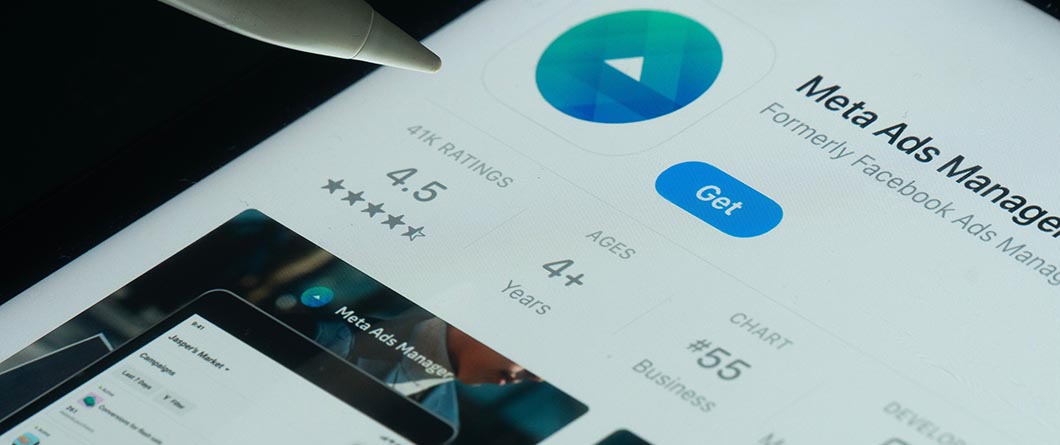
Facebook and Instagram occupy a different strategic position than Google for credit union paid advertising. Google captures intent that already exists. Meta creates demand among people who aren’t actively searching but are reachable based on where they live, what they’ve engaged with, and how their behavior signals financial readiness. For credit unions, that distinction matters. A prospective member who just moved into your field of membership isn’t searching for a credit union yet, but they’re on Facebook and Instagram every day.
The first thing credit union CMOs need to understand before launching Meta campaigns is the Financial Products and Services Special Ad Category. As of January 2025, Meta requires all U.S. advertisers promoting credit products, banking services, loans, savings products, and insurance to designate their campaigns under this category. This isn’t optional. Campaigns that should carry the designation but don’t risk disapproval and account-level compliance flags. The category exists to prevent discriminatory targeting practices and imposes specific restrictions on how credit unions can reach prospective members.
The Financial Products and Services Special Ad Category restricts targeting. Age is fixed at 18-65+, all genders must be included, and ZIP code exclusions are banned. Detailed demographic (like income) and behavioral targeting, including many interest categories and Meta-based Lookalike Audiences, are unavailable. The remaining options are state- or broader-geographic radius targeting, Custom Audiences from first-party data, and pixel-based website visitor retargeting.
These constraints require a creative and structural response. First-party data becomes your most important targeting asset under these rules. Custom audiences built from your member email list, website visitor retargeting through the Meta pixel, and video engagement audiences of people who watched your content are all compliant targeting approaches that can still drive precise reach. Financial services is one of the most expensive verticals to advertise in on Meta, and according to Vaizle’s 2025 Facebook Ads Benchmarks report, Finance & Insurance carries the highest average cost per click of any industry on the platform. That cost reflects both the targeting restrictions and the reality that financial services ads compete with highly visual, emotionally engaging content for attention in the feed. Credit unions that invest in strong, creative, and clear value propositions, paired with audience signals built from real member data, consistently outperform those that rely solely on broad geographic targeting.
Platform choice is crucial. Facebook’s broad reach and retargeting are better for cross-selling, promoting rate-driven products, and reaching 35–55-year-olds. Instagram, which skews younger, is ideal for brand-building among Millennials and Gen Z, especially for new-member acquisition and digital banking awareness. Tailoring creative and strategy to each platform and audience objective, rather than running identical campaigns, improves results.
What Facebook Ad Targeting Strategies Generate the Lowest Cost Per Member?
First-party audiences consistently outperform broad geographic targeting for cost efficiency. Custom audiences built from your member email list, Meta pixel retargeting, and video engagement pools all reduce wasted spend by reaching people with a demonstrated connection to your brand. This matters because, according to Vaizle’s 2025 Facebook Ads Benchmarks report, Finance & Insurance carries the highest average cost per click of any industry on Meta, making precise audience signals essential to keeping acquisition costs manageable.
LinkedIn Advertising for Credit Unions: Reaching Employer Groups and Affinity Partnerships

LinkedIn occupies a narrow but genuinely useful role in credit union paid advertising. It is not a volume channel, and it should not be treated as one. Where it earns its place is in a specific acquisition scenario that no other platform handles as well: reaching prospective members through their employer relationship.
Select Employee Groups, or SEGs, are a core membership growth structure for many credit unions. SEGs are businesses or organizations that partner with a credit union to extend membership eligibility to their employees, typically at no cost to those employees or their families. The challenge has always been getting in front of employees at those partner organizations before another financial institution does. LinkedIn solves that problem directly. Its targeting allows advertisers to reach users by employer name, job title, seniority level, job function, and industry, capabilities that no other major paid platform matches with the same precision. For a credit union with 10 or 20 SEG partner companies, LinkedIn Sponsored Content can reach employees at each organization with messaging that speaks specifically to the membership eligibility they already have.
Lead Gen Forms are particularly effective in this context. Rather than sending a click to an external landing page, Lead Gen Forms collect contact information directly within LinkedIn, pre-populating fields using the member’s profile data.
The cost structure deserves honesty. When a credit union is spending to reach employees at a specific list of SEG employers, paying a premium to ensure those impressions go to the right people, rather than relying on probabilistic targeting, is often worth it. The ROI calculation shifts from cost per click to cost per qualified SEG member acquired, which is much more favorable when employer eligibility is already guaranteed.
Outside of SEG outreach, LinkedIn has limited utility for most credit union acquisition campaigns. The audience skews professional, and the platform context is work-focused, which does not naturally align with consumer financial product discovery. InMail campaigns can support business banking outreach and commercial lending conversations for credit unions with those product lines, but for core retail member acquisition, Google and Meta deliver better volume at lower cost. LinkedIn earns its budget allocation when the use case is precise enough to justify the premium.
Landing Page Optimization: Converting Paid Traffic Into Member Applications

Paid advertising drives traffic. Landing pages determine whether that traffic converts. For credit unions, this is the part of the paid acquisition funnel that most directly controls cost per member, and it is consistently underdeveloped relative to the ad spend it supports.
Understanding the benchmark context is important before diagnosing performance. According to Ruler Analytics’ conversion benchmark research for financial services, the average conversion rate is 4.3%, while top performers convert at 23%. That gap is not explained by ad spend or audience quality. It is explained almost entirely by landing page design, message match, and friction reduction. Credit unions sitting near the industry average have significant room to close the distance through page-level optimization alone, without increasing media investment.
Credit unions often err by directing paid traffic to generic pages instead of product-specific landing pages. Sending a prospect who clicked an auto loan ad to the homepage forces them to search for the product, increasing the risk of abandonment. Dedicated, campaign-aligned landing pages with a headline mirroring the ad, a clear rate/offer, and a single call to action consistently perform better than pages requiring navigation.
Form length and timing are the next friction points. Research from Geear.io across credit union loan origination data shows auto loan application completion rates of just 28%, meaning 72% of people who start an auto loan application don’t finish it. Personal loan and deposit applications fare better at 42% completion, but the pattern is consistent. Asking for extensive documentation, hard-pull credit authorization language, or too many fields too early in the process triggers abandonment before the credit union has a chance to capture the lead. Progressive disclosure, collecting only name, contact, and basic loan purpose upfront before requesting detailed financial information, meaningfully improves completion rates. According to The Financial Brand, if applications take longer than five minutes to complete, abandonment risk increases to 60% or more.
Mobile optimization is non-negotiable. Financial services landing pages are increasingly accessed on mobile devices, and Unbounce’s data shows that mobile traffic in financial services actually converts 27.8% better than desktop, which is the inverse of most industries. That figure reflects the reality that mobile visitors to financial pages tend to be higher-intent, often acting on a direct ad click rather than browsing. Pages that load slowly, display forms that are difficult to complete on a small screen, or require excessive pinching and zooming lose those conversions.
Trust signals placed near the call to action also move conversion rates. The NCUA “Insured by NCUA” statement, member testimonials, loan approval speed indicators, and security badges reduce the anxiety that financial decisions naturally generate and give prospective members the assurance they need to take the next step.
What Landing Page Conversion Rates Should Credit Unions Benchmark Against?
The Unbounce 2024 Conversion Benchmark Report establishes a financial services median landing page conversion rate of 8.3%, compared to a cross-industry median of 6.6%. Top-performing financial services pages convert at 26.1% or higher. For credit unions specifically, product-specific landing pages tied to single campaigns with clear rate offers and streamlined forms consistently outperform general pages. Despite this, Signicat’s Battle to Onboard research found that 68% of consumers abandoned a financial services application in the year prior to the study, up from 63% just two years earlier. The data points to the same opportunity for most credit unions: the ad budget is producing clicks, but the landing page and application experience are failing to convert the interest those clicks represent into completed applications.
Attribution and Measurement: Tracking Paid Advertising ROI for Board Reporting

Paid advertising success hinges on funded accounts and booked loans, not just clicks or conversions, which is where most credit union reports fall short. Ad platforms lack visibility into core banking outcomes, leading CMOs to report on activity rather than results like cost per new member or loan volume by channel. To gain budget credibility, marketing must connect ad data to financial outcomes. The foundation for this is consistent UTM tagging on every paid ad. This ensures the source of every click is correctly identified, preventing paid traffic from being mislabeled as “direct” in analytics. Standardizing naming conventions, applying UTM parameters universally, and conducting regular audits are essential.
The attribution model applied to those tagged sessions determines what story the data tells. Most platforms default to last-click attribution, which assigns 100% of conversion credit to the final touchpoint before an application is submitted. That model systematically undervalues top-of-funnel channels like YouTube or Display, which frequently initiate the journey that a Search ad later closes. According to Google’s own Analytics documentation, GA4’s data-driven attribution model addresses this by using machine learning to analyze both converting and non-converting paths, assigning credit to each touchpoint based on how its presence changes the estimated probability of conversion. For credit unions with sufficient conversion volume, this model provides a more accurate picture of which channels are genuinely driving member acquisition versus which ones are receiving credit they didn’t earn.
To link digital conversions to funded accounts, deliberate infrastructure is needed. When an application is submitted via a paid landing page, UTM data must be captured as hidden fields and passed to the CRM/LOS with the application. Once funded, the loan or account is tagged to its source channel. This yields a true cost per funded loan or opened account by campaign, channel, and product. Consistently reporting this metric to leadership transforms paid advertising into a measurable growth driver.
How Do Credit Unions Measure Paid Advertising Attribution Across Multiple Touchpoints?
Credit unions that accurately measure paid advertising ROI connect three layers of tracking: UTM parameters on every ad across every platform, a multi-touch attribution model that distributes conversion credit across the full member acquisition path, and downstream matching of digital conversions to funded accounts through CRM or loan origination system integration. Google’s data-driven attribution model in GA4 uses machine learning to evaluate both converting and non-converting paths, assigning fractional credit to each touchpoint based on its measurable contribution to conversion probability rather than crediting only the final click.
This strategy credits awareness-stage channels like YouTube and Display for initiating the member journey, rather than giving all credit to the final retargeting ad. The result is a reporting framework that directly links campaign spend to cost per new member and booked loan volume by channel, providing the board-level metrics to justify paid advertising.
Compliance and Regulatory Considerations for Credit Union Paid Advertising
Paid advertising in financial services comes with a regulatory layer that fintechs and most consumer brands never have to navigate. For credit unions, getting this wrong is not a minor inconvenience. Examination findings, enforcement actions, and UDAAP violations carry real financial and reputational consequences. The good news is that compliance requirements are manageable when built into the campaign development process from the start, rather than treated as a final review step before launch.
NCUA Official Advertising Statement. Under Section 740.5 of NCUA regulations, every federally insured credit union must include the official advertising statement in all advertisements, including digital ads. The approved versions are “This credit union is federally insured by the National Credit Union Administration,” “Federally insured by NCUA,” “Insured by NCUA,” or the official NCUA sign. The statement must be clearly legible and no smaller than the smallest font used elsewhere in the ad. Exemptions apply to broadcast spots under 15 seconds, promotional items like pens and calendars, and advertisements that do not relate to member accounts, such as pure loan promotions. Every paid digital ad, including Google Search ads, display banners, Facebook ads, and YouTube pre-rolls, should be reviewed against this requirement as part of the creative approval workflow.
Regulation Z trigger terms. Truth in Lending requirements apply to any commercial message promoting consumer credit, across any medium. According to the Halo Programs credit union advertising compliance guide, certain phrases in loan ads automatically trigger mandatory additional disclosures. Mentioning a monthly payment amount, down payment figure, number of payments, or any finance charge requires the ad to also disclose the APR, the repayment terms, and the down payment if applicable. This matters practically for Google Search ads and Meta ads promoting auto loans or mortgages, where character limits can make it tempting to lead with a payment figure without the required accompanying disclosures. A compliant approach either avoids trigger terms entirely or ensures the full required disclosures are visible on the linked landing page.
Credit union digital advertising must adhere to strict regulatory compliance across multiple areas:
- Truth in Savings/APY: Advertising an APY (e.g., for certificates or high-yield savings) triggers NCUA Part 707 disclosures, including rate variability, offering period, minimum balance, and fees that reduce earnings. These must be clearly present in the ad or immediately on the landing page.
- Fair Lending/Meta Special Ad Category: All Meta financial product ads require the Financial Products and Services Special Ad Category, which restricts targeting to prevent discrimination. The NCUA prioritizes fair lending, scrutinizing digital targeting practices (like ZIP code or narrow demographic exclusions) that could inadvertently redline protected groups.
- UDAAP Standards: The CFPB’s Unfair, Deceptive, or Abusive Acts or Practices apply. Disclosures must pass the four P’s (prominence, presentation, placement, and proximity). Buried fine print or non-adjacent disclosures risk being deemed deceptive.
Systematic compliance is necessary to manage these requirements across platforms and campaigns. Credit unions should implement disclosure checklists, train ad teams on trigger terms, and maintain an advertising file documenting compliance reviews. Partnering with specialized financial services advertising agencies provides this critical compliance infrastructure.
When executed correctly, compliant paid advertising is an accountable, scalable member-acquisition channel, backed by measurement infrastructure (UTM tagging, attribution) for budget defense and built on transparent service.
Building and managing a paid advertising program that does all of this simultaneously, while staying compliant, optimizing continuously, and reporting outcomes to leadership, requires more than a generalist agency. Evok Advertising’s credit union marketing brings deep experience in multi-channel paid media, financial services compliance, and full-funnel attribution, helping credit unions compete with banks and fintechs that have far larger ad budgets. If you’re ready to turn paid advertising into a measurable member acquisition engine, connect with our credit union team to start the conversation.
Frequently Asked Questions About Credit Union Paid Advertising Strategy

What is the average cost per acquisition for credit union paid advertising in 2026?
Credit union-specific CPA benchmarks are not publicly standardized, but financial services industry data provides a useful planning baseline. According to WordStream’s 2025 Google Ads benchmarks, Finance & Insurance averages a 2.55% conversion rate on Google Search with an average cost per lead in the range of $70 to $130, depending on product, geography, and campaign maturity. Credit unions with tightly structured campaigns, product-specific landing pages, and strong Quality Scores consistently outperform these category averages. Auto loan and checking account campaigns tend to carry lower CPAs than mortgage or HELOC campaigns due to shorter decision cycles and lower friction applications.
How much should credit unions budget for Google Ads and Meta advertising campaigns?
Budget requirements vary significantly based on the field of membership size, the competitive market, and product priorities. A practical starting point for most credit unions is a minimum of $3,000 to $5,000 per month per platform to generate sufficient conversion volume for Google’s smart bidding algorithms to optimize effectively. According to Google’s own guidance on data-driven attribution, campaigns need at least 600 conversions per month for data-driven models to function reliably, which informs the budget required to reach optimization thresholds. Smaller credit unions may need to consolidate campaigns by product category to concentrate conversion data rather than spreading the budget thinly across too many campaigns simultaneously.
What conversion rates should credit unions expect from paid advertising landing pages?
According to Unbounce’s 2024 Conversion Benchmark Report, the median conversion rate for financial services landing pages is 8.3%, well above the all-industry median of 6.6%. Top-performing financial services pages convert at 26.1% or higher. Credit unions whose paid landing pages are converting below 3% typically have structural issues: sending paid traffic to a generic homepage rather than a product-specific page, forms with too many fields too early in the process, or poor mobile optimization. Each of these issues is fixable, and landing page improvements tend to produce faster ROI gains than increasing ad spend on underperforming pages.
Do credit unions need separate campaigns for different product lines, like auto loans versus checking accounts?
Yes, and this is one of the most impactful structural decisions in credit union paid advertising. Auto loan searchers and checking account searchers have fundamentally different intent, language, decision timelines, and competitive landscapes. Running both under a single campaign with shared keywords, ad copy, and landing pages produces diluted Quality Scores, poor message match, and higher cost per conversion across both products. Product-level campaign segmentation, each with dedicated keywords, tailored ad copy, and a single-focus landing page, is the baseline structural requirement for competitive performance in financial services paid search.
How does paid advertising comply with financial services regulations and NCUA guidelines?
Credit union paid advertising must satisfy several overlapping regulatory requirements. NCUA Part 740 requires the official advertising statement, “Federally insured by NCUA” or equivalent, to appear in all advertisements, including digital ads. Regulation Z trigger terms in loan ads, such as monthly payment amounts or APR figures, require additional mandatory disclosures. Truth in Savings rules under NCUA Part 707 govern how APY must be disclosed when advertising deposit products. Meta’s Financial Products and Services Special Ad Category designation is mandatory for all financial product campaigns on Facebook and Instagram, and restricts certain demographic targeting options to prevent discriminatory exclusion. UDAAP standards apply across all platforms and evaluate disclosures on four criteria: prominence, presentation, placement, and proximity to the triggering claim.
What targeting options work best for credit union Facebook and Instagram ads?
Under Meta’s Financial Products and Services Special Ad Category, which became mandatory in January 2025, standard demographic targeting options, including age ranges, income levels, ZIP code exclusions, and many interest categories, are restricted. The most effective compliant targeting approaches are first-party custom audiences built from member email lists, pixel-based retargeting of website visitors who viewed product pages but did not apply, and video engagement audiences of people who watched the credit union’s content. Geographic radius targeting at the state level remains available and is the primary tool for field-of-membership alignment when first-party data is limited. According to WordStream’s 2025 Facebook Ads benchmarks, Finance & Insurance has the highest CPC on Facebook at $1.22 for traffic campaigns, underscoring the importance of audience quality over reach volume.
How long does it take to see results from credit union paid advertising campaigns?
Google Search campaigns targeting high-intent keywords typically generate application volume within the first two to four weeks of launch, though cost efficiency improves significantly over the first 60 to 90 days as Quality Scores stabilize and bidding algorithms accumulate conversion data. Meta campaigns generally take longer to optimize, with the algorithm requiring sufficient conversion events to exit the learning phase, typically defined as 50 optimization events per ad set within a seven-day window. YouTube and Display campaigns operate on longer timelines and should be evaluated on assisted conversions and downstream application volume rather than direct last-click conversions. Credit unions expecting immediate funded account volume from brand-new campaigns across all platforms simultaneously are likely to be disappointed. A phased launch, prioritizing Google Search first, then adding Meta and Display as the account matures, produces more consistent and measurable results.
Should credit unions use in-house teams or agencies to manage paid advertising?
The right answer depends on campaign complexity, compliance requirements, and internal bandwidth. In-house teams can manage straightforward single-platform campaigns effectively when they have dedicated PPC expertise and time for continuous optimization. As campaign scope expands across Google Search, Display, YouTube, Meta, and LinkedIn simultaneously, each requiring product-specific structure, ongoing bid management, creative testing, compliance review, and attribution reporting, the operational complexity typically exceeds what a generalist marketing team can handle alongside other responsibilities. Agencies that specialize in financial services advertising bring established compliance workflows, platform-level expertise, and benchmark data across multiple credit union accounts that internal teams rarely have access to.
What ROI benchmarks should credit union CMOs use to evaluate paid campaign performance?
The most meaningful benchmark is cost per funded account or cost per booked loan by product and channel, connected through the attribution system described in Section 7 of this guide. Interim benchmarks that indicate whether a campaign is on track include cost per application submission compared against the financial services CPL range of $70 to $130 reported by WordStream, landing page conversion rate benchmarked against the financial services median of 8.3% from Unbounce’s 2024 data, and Quality Score by campaign to monitor cost efficiency trends. ROAS targets should be set by product, based on the lifetime value of a funded loan or opened account, rather than a blended cross-product target that obscures performance differences between campaigns.
How do credit unions compete with banks that have larger advertising budgets?
Scale is a real disadvantage, but it is not insurmountable. Large banks spend broadly across geographic markets and product categories. Credit unions can outperform them within defined service areas by concentrating budget on high-intent search terms specific to their field of membership, building landing pages that convert at above-median rates through better message match and lower friction, and using retargeting to extend the impact of every click rather than letting unconverted traffic go cold. Credit union membership growth dropped to 1.88% at mid-year 2025, the lowest rate since 2011, driven in part by competitive pressure from fintechs and banks with sophisticated digital acquisition programs. The credit unions that are growing despite that environment are not outspending competitors. They are out-structuring them, with tighter campaigns, better landing pages, and attribution systems that tell them exactly where their dollars are working.