


How Staples Learned to Be a “Baddie” Through Culture Marketing
A frontline employee with a ring light and a TikTok account just did what years of corporate repositioning couldn’t: she made Staples cool. Not “ironically cool.” Not “cool for an office supply store.” Genuinely, virally cool. And the marketing playbook behind it is worth pulling apart.
The Staples “Baddie” moment is more than a feel-good story about an employee going viral. It’s a case study in culture marketing, employee-generated content, and what happens when a brand is smart enough to get out of its own way. For marketers, it’s a signal that the most effective brand storytelling might not come from the agency, the CMO, or the creative department. It might come from the people closest to the product.
Here’s what happened, why it worked, and what your brand should (and shouldn’t) take from it.
What is Culture Marketing?

Culture marketing is a brand strategy that focuses on embedding a product, service, or idea into the cultural conversations and behaviors that audiences already care about — rather than interrupting those conversations with traditional advertising.
Unlike conventional marketing, which pushes messages toward a target audience, culture marketing works by making a brand relevant to the identities, values, and shared language of a specific community. It’s less about what a brand says and more about what a brand means within a cultural context.
It’s worth distinguishing between culture marketing and cultural marketing, terms sometimes used interchangeably but with meaningfully different focuses. Cultural marketing typically refers to adapting marketing messages and materials for specific cultural groups; think localization, language, or multicultural audience strategy. Culture marketing, by contrast, is about plugging into the broader currents of popular culture: memes, movements, subcultures, and the platforms where they live. The Staples “Baddie” moment is a textbook example of culture marketing in action.
Why Did the Staples TikTok Go Viral?

Oblivion (@blivxx), a Staples employee, started posting short in-store videos showcasing overlooked print products and services: custom mugs, planners, notebooks, and other printables that most customers had no idea were available.
Two details matter more than the product list. First, her framing wasn’t “buy this.” It was “why are we not making cooler stuff with what’s already here?” She mixed retail humor with real operational knowledge about the printing process, and it landed. Second, the reaction pattern was immediate and consistent. Comments flooded in from people saying they had no idea Staples offered these services and that the videos made them want to try them.
When a brand’s real value lives behind a counter or in an aisle that shoppers never browse, awareness becomes the core constraint, not product quality. The viral moment worked because it turned low-salience inventory into high-salience culture, without ever feeling like a corporate ad.
That last part is critical. Audiences have become remarkably skilled at detecting branded content, and their tolerance for it keeps dropping. What made these videos cut through wasn’t production value or a clever hook. It was the gap between what people assumed about Staples and what they were suddenly seeing. Surprise is one of the most underutilized emotions in marketing, and it only works when it’s genuine.
The Business Context: A Perception Problem Sitting on Top of a Services Business
The irony is that Staples has been leaning into services for years, especially printing, shipping, and other in-person tasks that still benefit from a physical location. In a 2025 interview, Modern Retail reported that leadership positioned stores as service-driven, with printing as a main traffic driver alongside passport photos and shipping.
Location analytics back that up. Placer.ai data showed that overall visits in Q2 2025 exceeded Q2 2019 levels by 5.6%, with visits per location also increasing. Services and B2B offerings were identified as key drivers of that comeback.
And the “hidden services” highlighted in the viral videos aren’t fringe offerings. The company’s Print & Marketing pages actively promote document printing, posters, labels, stickers, business cards, photo mugs, and same-day options. Its direct mail program is positioned as an end-to-end service with targeting and execution, marketed as “four easy steps” and priced as low as 29 cents per piece, including postage.
So the strategic problem was never “we don’t offer anything new.” It was “people don’t associate us with what we now do.” That gap showed up within the trend itself. A consultant (via a creator commentary chain) recalled long-standing brand-perception concerns and the company’s historic protectiveness over how it was promoted.
This is a situation many brands find themselves in, especially in industries like financial services, healthcare, and hospitality, where organizations have expanded their offerings but haven’t updated public perception to match. The product isn’t the problem. The story is.
Culture Marketing Mechanics: “Baddie” as an Interface, Not a Label
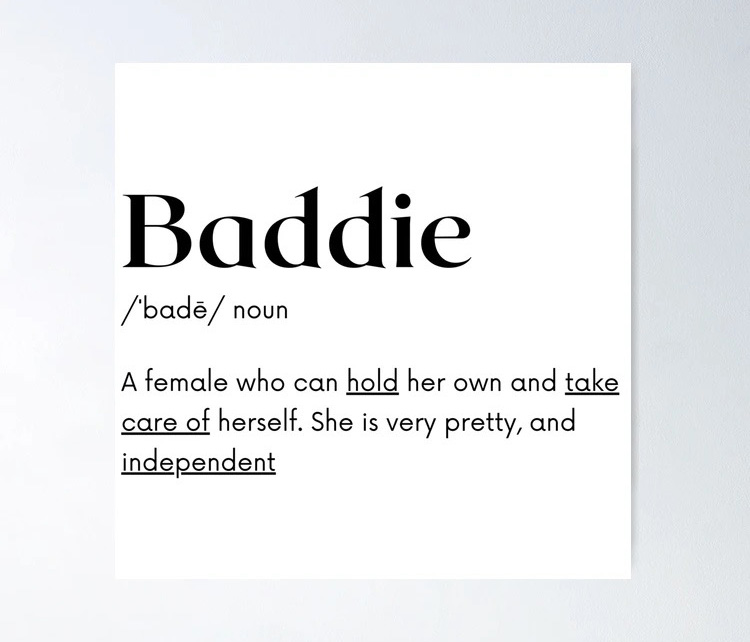
Calling her a “baddie” isn’t just internet hype. It’s cultural shorthand that signals confidence, style, and an audience-first attitude. Merriam-Webster defines the slang term as “a confident, stylish, and attractive woman,” which tracks with the persona viewers recognized in her tone and delivery.
But the deeper culture marketing move is how she treated printing like fandom knowledge. Instead of explaining services in corporate language, she turned paper types, lamination, sublimation, and “how it’s made” processes into insider lore that feels fun to learn. That’s why the content travels. People share “I didn’t know this existed” discoveries because discovery is social currency, especially when it’s weirdly practical.
This lines up with cultural strategy theory. Douglas Holt, a former professor at Oxford and Harvard Business School, argues that social media shifted how culture gets produced, with “digital crowds” becoming powerful cultural innovators through what he calls “crowdculture.” Brands often can’t compete with the pace and credibility of these cultural producers. In this case, the cultural producer isn’t an outside fandom. She’s a worker using the platform’s native language to translate a brand’s real capabilities into something shareable.
One of the strongest signals that Staples recognized the cultural layer: the brand showed up in her comment sections using internet-native language. The Staples corporate TikTok account commented “bogos binted queen” under her videos. That single move matters because it communicates, “We understand the joke,” reducing the distance between the brand and the community without co-opting it.
Compare that to brands that respond to viral moments with polished corporate statements or try to insert themselves into trends with obviously scripted content. The difference between joining a conversation and hijacking one comes down to fluency. You either speak the platform’s language or you don’t. There’s no faking it, and audiences can tell the difference within seconds.
Why Authenticity Carried the Message When Ads Would Have Bounced
The advantage here isn’t that “employees are more authentic” in some vague, hand-wavy sense. It’s that employee voice changes the credibility math.
People consistently trust recommendations from people they know more than advertising. Nielsen’s “Global Trust in Advertising” research found that 83% of respondents trust recommendations from friends and family, and 66% trust consumer opinions posted online. Peer-like voices, including employees posting from personal accounts, start the conversation with a higher baseline of belief than brand content ever could.
Inside the workplace trust context, Edelman’s 2024 Trust Barometer positions “my employer” as the most trusted institution among employees surveyed globally. That doesn’t mean every employee video is automatically trusted. It means organizations have a credibility asset in the employer-employee relationship that can translate into external belief when the message feels grounded in real experience.
The “authenticity” in this case is structural. She is inside the system, showing the system, using the system’s language, and staying unscripted enough that viewers can tell it’s not a paid spot. That’s a combination advertising can’t manufacture.
This has implications beyond retail. Any brand that relies on frontline staff, whether it’s a credit union branch, a hotel front desk, a restaurant kitchen, or a healthcare clinic, is sitting on the same kind of credibility asset. The people who deliver the service every day understand it in ways a marketing team can’t replicate. The question is whether the organization creates the conditions for those voices to be heard.
The Behavior Change Path: Curiosity, Consumption, Ambassadorship
There’s a useful three-stage framework for understanding what happened here: curiosity, consumption, and ambassadorship. Each stage maps to well-established behavior models, but the labels are culturally fluent enough to actually stick in a strategy conversation.
Curiosity triggers when people become aware of a gap between what they know and what they want to know. TIME summarized George Loewenstein’s curiosity research as “attention becomes focused on a gap in one’s knowledge,” which motivates people to seek the missing information. The videos are essentially a sequence of “you didn’t know this existed” gaps that immediately pay off with a satisfying explanation, which keeps people from scrolling past.
Consumption is where intrigue becomes action. The behavior hurdle usually isn’t motivation alone; it’s motivation plus ability plus a prompt. BJ Fogg’s behavior model states that behavior happens when Motivation, Ability, and a Prompt converge at the same moment. In this story, the prompt is the content itself. The motivation is “this looks fun and useful.” And the ability? “It’s local, it’s same-day, I can just walk in or order online.”
Ambassadorship is the conversion marketers often underestimate: customers repeating the story for you. The meme-level chatter, plus people publicly stating intent to try services, becomes social proof. This aligns with diffusion research, which emphasizes how adoption accelerates through word of mouth and social modeling by opinion leaders. In this trend, the “opinion leader” role is shared between the original creator and a growing base of commenters confirming “I tried it” or “I’m going tomorrow,” which reduces perceived risk for the next person.
If you want a marketing-science parallel, McKinsey & Company’s consumer decision journey argues that the post-sale experience serves as a trial period for loyalty, and that journeys aren’t linear funnels but include feedback loops. That’s the same logic as the ambassadorship stage. The experience has to deliver, or the loop collapses.
This three-stage path also explains why so many social media strategies stall at stage one. Brands invest heavily in awareness content that generates impressions and maybe some engagement, but there’s no bridge to consumption and no mechanism to turn customers into advocates. The Staples case shows what happens when all three stages fire in sequence, and it’s worth noting that none of it required a media buy.
How Can Brands Use Culture Marketing Without Losing Authenticity?

This case is a clean argument for employee-led culture marketing. But it is not a call for brands to turn every associate into a content creator on command. The edge is voluntary energy, and the trust is earned through specificity.
Ensure compliance before you scale. If an employee endorses a product or service and there’s a “material connection,” the relationship may need clear disclosure. The Federal Trade Commission explains that a material connection can include an employment relationship and emphasizes clear disclosure in social media endorsements. In this trend, the employment context is visible in uniform, but brands replicating the model with less obvious connections shouldn’t assume “tagging the brand” equals disclosure.
Operationalize the promise fast. The content is driving people toward real services, such as direct mail and same-day printing. If stores can’t meet the surge in demand or the experience is confusing, the comment section flips from hype to backlash. That isn’t theoretical. It’s the exact “post-sale trial period” problem described in the consumer decision journey model.
Build the infrastructure before the moment arrives. The brands that capitalize on organic viral moments are the ones that already have social media monitoring in place, clear internal guidelines for employee content, and a social team empowered to respond in real time without running every comment through legal. You can’t plan a viral moment, but you can plan to be ready for one.
A final nuance worth noting: Staples didn’t suddenly “become cool.” It gained relevance because an employee translated the brand’s real utility into a cultural format people enjoy, and because the corporate response didn’t shut it down. Reports indicate the company followed the creator, PR reached out to her store, and the corporate account engaged in comments, all signaling that leadership was willing to meet the audience on the audience’s terms.
That restraint is the hardest part for most brands. The instinct is to professionalize what’s working, and in doing so, strip out everything that made it work in the first place. The best thing Staples did here wasn’t a campaign. It was a decision not to interfere with one.
The Bigger Takeaway: Social Media Strategy That Meets People Where They Are

The Staples Baddie story isn’t a one-off anomaly. It’s a preview of where social media marketing is heading. Audiences are migrating away from polished brand content and toward real voices, real expertise, and real utility. The brands that win on social in the next few years won’t be the ones with the biggest production budgets. They’ll be the ones that figure out how to unlock the stories already living inside their organizations.
That takes more than a content calendar. It takes a social media strategy built on audience insight, platform fluency, and the kind of creative infrastructure that can move fast when opportunity shows up. It takes understanding which platforms your audience actually uses, what kind of content earns their attention versus what gets scrolled past, and how to build a feedback loop between social engagement and real business outcomes.
Whether you’re a credit union trying to reach younger members, a healthcare organization building community trust, or a hospitality brand competing for attention in a crowded market, the underlying lesson is the same: the most powerful marketing doesn’t feel like marketing. It feels like someone you trust showing you something you didn’t know.
At evok advertising, that’s exactly how we approach social media strategy for our clients. We help brands find the intersection of authentic storytelling, platform-native content, and measurable results, so when your moment comes, you’re not scrambling to catch up. You’re already in the conversation. Let’s talk about what that looks like for your brand.
Frequently Asked Questions About Culture Marketing
What is culture marketing?
Culture marketing is a brand strategy that taps into the cultural conversations, communities, and behaviors that audiences already participate in, rather than pushing messages at them. Instead of interrupting culture with advertising, culture marketing makes a brand part of the culture itself. It works best when it’s grounded in genuine relevance, whether that’s a subculture, a platform’s native language, or a shared set of values.
What’s the difference between culture marketing and influencer marketing?
Influencer marketing is a tactic: you identify someone with an audience and pay or partner with them to promote your brand. Culture marketing is a broader strategy focused on embedding your brand into the cultural moments your audience already cares about. Influencer partnerships can be a vehicle for culture marketing, but they’re not the same thing. The Staples moment makes the distinction clear: Oblivion wasn’t hired as an influencer. She was an employee who organically became a cultural conduit for the brand. That’s the kind of authenticity a paid partnership can’t replicate.
How do brands use employee-generated content effectively?
The most effective employee-generated content is voluntary, specific, and rooted in real expertise. Brands that try to manufacture content by assigning content creation to employees tend to produce content that feels scripted, and audiences notice immediately. The better approach is to create the conditions for it: clear social media guidelines, a culture that gives employees permission to share, and a social team ready to amplify what resonates. Compliance matters too. When an employment relationship exists, FTC guidelines may require disclosure, so brands should have that process in place before they scale.
What is the “curiosity, consumption, ambassadorship” framework in marketing?
It’s a three-stage behavior model that maps how audiences progress from discovering a brand to becoming advocates. Curiosity is triggered when content reveals a gap between what someone knows and what they want to know, the “I had no idea this existed” reaction. Consumption happens when curiosity converts to action: visiting a store, trying a service, making a purchase. Ambassadorship is the final stage, where customers start repeating the story on their own, creating social proof that drives the next wave of curiosity. Most social media strategies stall at stage one. The Staples case is notable because all three stages fired in sequence without a single paid media placement.
What did Staples do right when their employee went viral on TikTok?
A few things stand out. First, they didn’t shut it down or over-professionalize it. The instinct for many brands is to bring viral employee content “in-house,” which usually strips out everything that made it work. Instead, Staples followed the creator, had PR reach out to her store, and engaged in her comment section using platform-native language “bogos binted queen” is the now-famous example. That move is especially instructive: it signaled cultural fluency without co-opting the moment. The brand joined the conversation without hijacking it.