


Restaurant Social Media Marketing: Platform-Specific Strategies That Drive Foot Traffic and Reservations
Restaurant marketing has quietly reorganized itself around social media, and most CMOs are still operating on the assumption that social is one channel among many. It isn’t. For younger diners, social platforms have replaced Google, Yelp, and TripAdvisor as the primary discovery layer, and the visual-first nature of TikTok and Instagram has restructured what makes a restaurant worth trying in the first place. A guest’s decision to walk through the door increasingly comes down to whether a short video made the food look worth the trip, not whether the website has a good reservation flow or the reviews average above four stars.
What this means operationally is that social media is no longer an awareness tactic. It’s the top of the funnel, the middle of the consideration phase, and for many diners, the booking channel itself. The restaurants gaining market share in 2026 are the ones treating platform strategy with the same rigor they apply to menu development and labor scheduling. The ones losing share are still posting once a week on Facebook and wondering why Tuesday nights are empty.
This guide breaks down what actually works on TikTok, Instagram, and Facebook for restaurants right now, with platform-specific engagement benchmarks, content frameworks, and measurement systems that tie social activity to foot traffic and revenue. The strategies below are built for CMOs who need to defend budget to ownership and produce measurable results in a category where margins are thin and competition is getting noisier every quarter.
Why Social Media Has Become the Primary Discovery Platform for Restaurant Diners in 2026
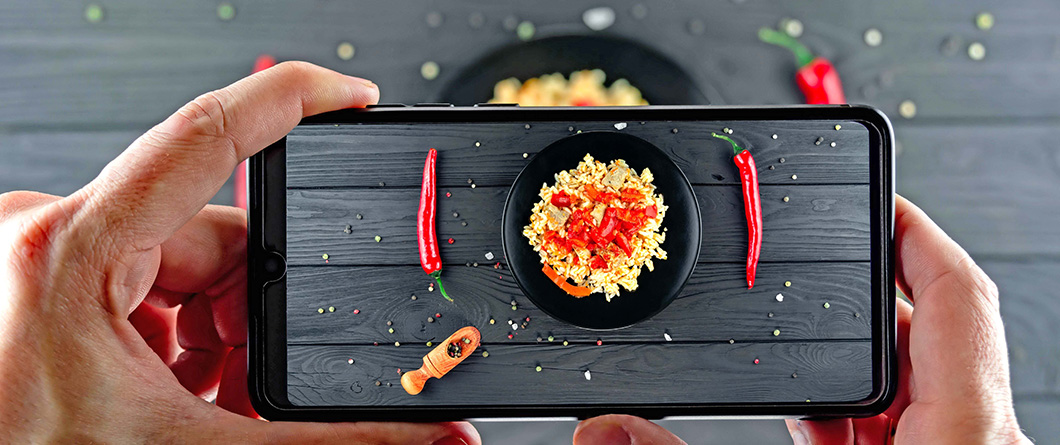
Social media has replaced traditional search as the first stop for most diners under 45. According to Toast’s 2026 discovery report, which surveyed 1,466 U.S. adults in October 2025, TikTok alone drives 38% of restaurant discovery among Gen Z, making it the single most influential introduction tool for the youngest spending generation. For restaurant CMOs still treating social as a nice-to-have alongside their “real” marketing, the category shift has already happened.
The generational numbers explain why 67% of Gen Z and 57% of Millennials rely on social platforms when deciding where to eat, with 55% of Gen Z diners now using Instagram for restaurant reviews and 44% turning to TikTok. The research phase that used to happen on Google and Yelp has moved inside TikTok’s FYP and Instagram’s Explore tab.
What makes this shift operationally relevant is that social-driven discovery bypasses every traditional trust signal a restaurant has invested in. Star ratings, award mentions, and expensive website builds matter less when a diner’s decision is made in 15 seconds. Marketing Charts reporting on survey data found that 46% of Gen Z adults and 35% of Millennials say they only or primarily use social media for search, nearly double the overall adult average of 24%.
Restaurants without a functioning social presence in 2026 aren’t just missing awareness; they’re getting filtered out of the consideration set entirely. The cost of being invisible is measurable in lost trials among the diners whose lifetime value will define the next decade of the industry.
Platform Performance Benchmarks: TikTok, Instagram, and Facebook Engagement Rates for Restaurants
Every platform rewards different behavior, and the engagement math reflects that. Socialinsider’s 2026 benchmark report, which analyzed more than 70 million posts across the major platforms, found that TikTok’s average engagement rate climbed to 3.70% in 2026, up 49% year over year, while Instagram held nearly flat at 0.48% and Facebook averaged 0.15%. The 10x gap between TikTok and Facebook isn’t a measurement error. It reflects fundamentally different distribution models, where TikTok’s algorithm pushes content to non-followers aggressively and Facebook’s prioritizes paid reach over organic.
For restaurants specifically, the platform picture gets more nuanced. Hootsuite’s industry benchmarks place dining and hospitality brands at around 3.1% engagement on Instagram, well above the cross-industry average. That premium exists because food content performs natively on visual platforms. What most CMOs miss is how much the numbers shift when follower size is factored in. Accounts with fewer than 10,000 followers average 4.7% engagement on TikTok and 2.8% on Instagram, significantly higher than those with more than 100,000 followers.
Context also matters when interpreting these numbers across tools. Engagement rate methodologies differ across Socialinsider, Rival IQ, and Sprout Social, so a Facebook post at 0.25% may not beat a competitor at 0.20% if the formulas aren’t identical. For CMOs building scorecards, the practical move is to choose one benchmark source and measure consistently against it rather than cherry-picking a flattering number each month.
What Social Media Engagement Rates Can Restaurants Expect Across Different Platforms?
Food and beverage brands average a 4% engagement rate on TikTok, ranking among the top three industries and well above the cross-platform median, according to Rival IQ’s TikTok Benchmark Report, which analyzed more than 374,000 videos across 2,000+ brand handles. Instagram engagement for dining and hospitality brands pulls closer to 3.1% on Hootsuite’s industry benchmark, while Facebook averages 0.15% across all industries, making it a community and local-discovery platform rather than an engagement-driving one.
TikTok Strategy for Restaurants: Short-Form Video Content That Drives Immediate Visits

TikTok operates on fundamentally different rules than other social platforms, which is both its opportunity and its trap for restaurant marketers. The For You Page distributes content based on watch time, completion rate, and re-watches rather than follower count, which is why a local taco shop with 800 followers can outperform a national chain with 200,000. What doesn’t work is treating TikTok like Instagram. Polished food photography, corporate voiceover, and brand-safe captions consistently underperform raw, casual content shot on a phone between lunch and dinner service.
The content categories that work for restaurants cluster around four repeatable formats. Process videos, which show a signature dish being made from raw ingredients to the final plate, generate saves and shares at the highest rates because they combine anticipation with payoff. Behind-the-scenes content featuring kitchen staff, prep rituals, or chef personalities builds a parasocial connection that no food photo can replicate. POV and reaction-style videos, where a diner’s experience drives the narrative, perform well because they mimic the trusted friend recommendation that social platforms have replaced. Trending audio overlaid on menu items or service moments ties restaurant content to the broader TikTok ecosystem, earning algorithmic lift.
Sound strategy matters more than most restaurant operators realize. A Kantar study commissioned by TikTok found that 73% of respondents would “stop and look” at ads with audio, significantly higher than on any other platform, and that trending sounds are among the strongest signals the algorithm uses to decide which videos to push to new audiences. Restaurants that publish videos without sound, or with generic stock music, forfeit the distribution advantage that makes TikTok worth the production time in the first place.
Which TikTok Content Formats Drive the Highest Restaurant Visit Conversion Rates?
Process and behind-the-scenes videos drive the strongest performance for restaurant content on TikTok, with Rival IQ’s TikTok Benchmark Report finding that standout food brands like NYT Cooking earn engagement rates nearly double the platform average of 2.6% through behind-the-scenes videos and recipe how-tos. Food and beverage sits among the top three industries for TikTok engagement overall, with an average 4% engagement rate by follower. For individual restaurants, the highest-converting formats combine a signature dish in the first three seconds, trending audio, and a clear location tag, which give algorithmic distribution a reason to surface the video to nearby users and give diners a frictionless path from discovery to visit.
Instagram Marketing for Restaurants: Reels, Stories, and Visual Content That Converts Followers
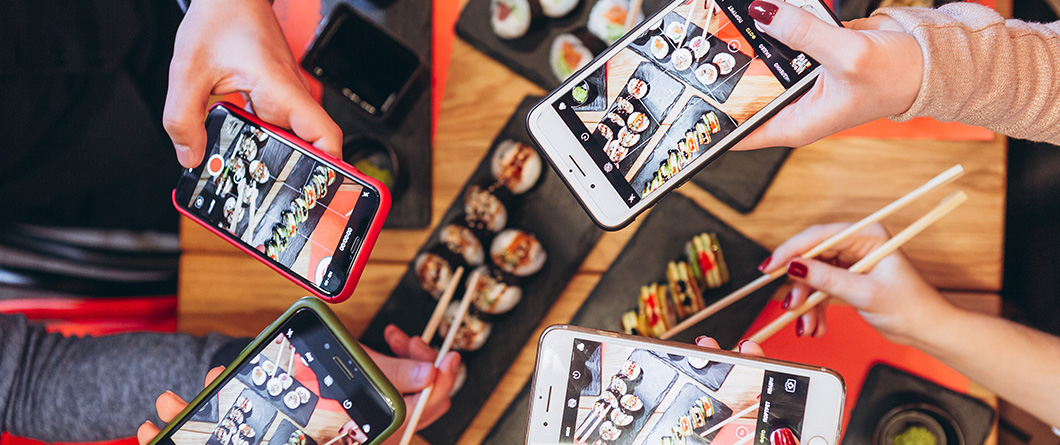
Instagram remains the platform where restaurants convert scrollers into guests, largely because of how tightly the platform now integrates discovery with booking. Reels drive the bulk of new-audience reach, Stories handle daily engagement with existing followers, and the business profile functions as a mini-landing page with Reserve and Order Food buttons that eliminate friction between interest and transaction. For restaurants, the practical split is three parts: Reels for top-of-funnel discovery, two parts Stories for frequency and promotion, and one part feed post for permanence and branding.
Format choice drives most of the engagement variance on Instagram, and the rankings have shifted. Socialinsider’s analysis found Instagram carousels lead engagement at 0.55%, with Reels close behind at 0.52%, meaning restaurants that default to video-only are leaving engagement on the table. Carousels work especially well for menu reveals, multi-course tasting experiences, and before-and-after cooking sequences where swiping invites deeper attention. Reels still dominate for reach because Instagram’s algorithm distributes them aggressively to non-followers, but the restaurants doing Instagram well publish both formats weekly rather than picking one.
Instagram’s search function also changed the SEO math for restaurants in 2025 when the platform started indexing content for Google. A Reel captioned “best wood-fired pizza in Winter Park” with proper location tagging can now surface in a Google search the same way a Yelp page does, which turns every post into a small SEO asset with local intent. Combined with Instagram’s built-in reservation and order integrations, this creates a shorter path from discovery to booking than restaurants have ever had on the platform.
What Instagram Content Mix Generates the Most Restaurant Reservations?
The highest-converting Instagram content mix for restaurants combines Reels for reach, carousels for depth, and Stories for reservation prompts. Buffer’s 2026 analysis found that Instagram carousels earn the highest median engagement rate on the platform at 6.9%, while Reels reach 2.25 times more people than single-image posts, meaning each format plays a distinct role in the funnel. For restaurants specifically tracking reservation conversion, Stories with Reserve buttons and swipe-up reservation links convert the warmest traffic because they reach followers who already know the brand and are one tap away from booking. A weekly content mix of three to four Reels, two carousels, and daily Stories consistently outperforms feeds built around single-image posts, particularly for independent operators without a professional photography budget.
Facebook Marketing for Restaurants: Community Building and Local Discovery Strategies
Facebook lost its cultural cachet years ago, but writing it off in 2026 would be a mistake for any restaurant serious about local discovery. TouchBistro’s 2025 Diner Trends Report found that 45% of diners check a restaurant’s Facebook business profile before visiting, and Facebook remains the most widely used social platform for restaurant marketing, with 73% of restaurateurs using it to promote their business. The platform functions differently than TikTok or Instagram. Organic reach is minimal, engagement rates hover around 0.15%, and the algorithm actively demotes brand content in favor of personal connections. But as a local discovery tool and community hub, Facebook still earns its place in the mix.
The strongest restaurant use cases on Facebook are community-driven rather than content-driven. Business profile completeness matters enormously because Facebook pages often appear high in Google results for restaurant searches, making the page function as a secondary website for hours, menu, reviews, and booking links. Facebook Events drive measurable turnout for everything from trivia nights and wine dinners to holiday-themed seatings and community fundraisers. Facebook Groups, both branded and local, create deeper relationships than feed content can, particularly for restaurants with a strong neighborhood identity.
Reviews are the other critical Facebook asset. Restaurants should treat Facebook review responses with the same urgency they bring to Google and Yelp, since negative feedback spreads faster on Facebook’s interconnected social graph than on review-only platforms. Responding within 24 hours, thanking positive reviewers by name, and addressing criticism without defensiveness all compound into the trust signals that convert Facebook lurkers into first-time guests. The platform rewards presence and responsiveness more than creative output, which is actually good news for restaurant teams juggling daily operations.
Content Strategy Frameworks: What to Post, When to Post, and How Often for Maximum Engagement
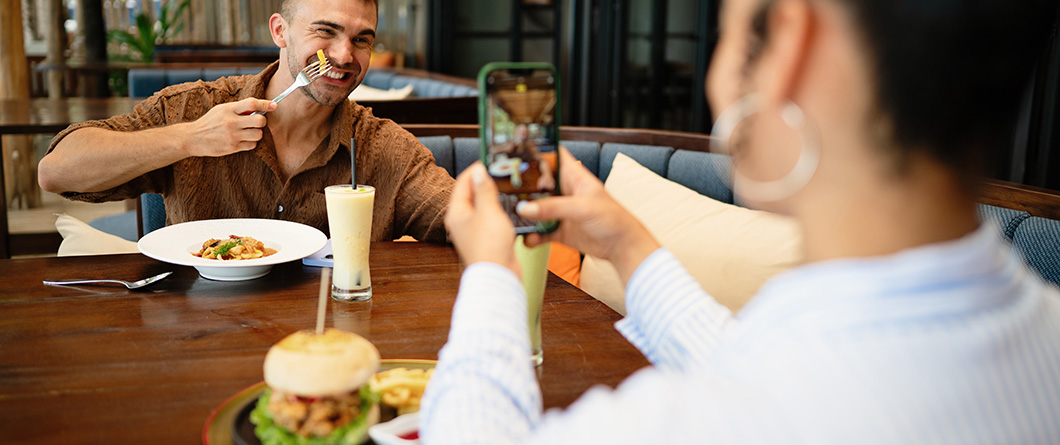
Restaurants fail at social media more often from inconsistency than from poor creative. A sustainable strategy starts with posting frequency the team can actually maintain. Buffer’s analysis of TikTok posting data found that moving from once-weekly to two-to-five times weekly delivers the most meaningful lift in views before diminishing returns set in. Timing matters almost as much as frequency, with engagement on TikTok peaking mid-to-late afternoon on weekdays as users scroll during lunch breaks and after work.
A workable content pillar split uses four rotating themes: signature menu items and new launches, behind-the-scenes kitchen and staff moments, guest experiences and user-generated content, and time-sensitive promotions or events. Rotating through these pillars weekly gives the calendar structure while preventing feed monotony. Daypart content layered on top aligns with when diners make food decisions, with breakfast content at 7 a.m., lunch at 11, and dinner at 4.
Production cost is the constraint most restaurants cite for weak output, but it is mostly solvable with smartphone-first workflows. Training front-of-house managers to capture two or three short clips per shift, paired with a lightweight editing app and a shared content library, produces enough raw material for a full weekly calendar. The restaurants winning on social in 2026 aren’t outspending competitors. They’re producing more consistently with less polish.
User-Generated Content and Influencer Partnerships: Amplifying Reach Through Authentic Advocacy
User-generated content and influencer partnerships serve different functions, and conflating them is one of the most expensive mistakes restaurant marketers make. UGC is free, authentic, and extends reach through the networks of people who have actually visited. Influencer content is paid, produced, and extends reach to the audiences of creators with established followings. Both have a place, but the economics and the trust signals are fundamentally different. Consumers consistently tell researchers they trust peer content more than sponsored content, which means the strategic question is how to build a system that captures and amplifies UGC at scale while using paid creator partnerships for the specific moments where reach or production quality justifies the cost.
The case for UGC-first strategy is strong for restaurants because the content is already being made. Diners photograph their meals by default, post to Stories constantly, and tag locations when they visit somewhere new. The gap is usually in capture and amplification rather than creation. Restaurants that build simple systems around branded hashtags, QR codes on tables, incentive programs for posting, and active repost permissions consistently outperform restaurants relying on professional photography for feed content.
Influencer partnerships are most effective when tied to specific business objectives rather than general awareness. Micro-influencers in the 10K to 100K follower range typically outperform macro-influencers on engagement rate and cost per engagement, particularly when their audience geography matches the restaurant’s trade area. A local food creator with 40,000 genuinely engaged followers in the same metro will almost always drive more measurable foot traffic than a national creator with 500,000 followers scattered across the country.
How Do User-Generated Content and Influencer Partnerships Compare in Driving Restaurant Traffic?
User-generated content and influencer partnerships serve different functions in a restaurant’s marketing mix, and the highest-performing strategies use both. Sprout Social’s Q2 2025 Pulse Survey found that the top two things consumers want from brands on social are brands interacting with audiences (58%) and posting original content series (57%), both of which UGC naturally supports, as it surfaces real customer interactions and builds an ongoing stream of authentic content. For restaurants, micro-influencers in the local trade area typically deliver better foot traffic attribution than macro-influencers, as their audiences overlap with the restaurant’s service radius. The highest-performing restaurant strategies use UGC as an ongoing content engine and reserve influencer partnerships for specific activations, such as new menu launches, location openings, or event promotions.
Measuring Restaurant Social Media ROI: From Engagement to Foot Traffic and Revenue Attribution

Social media ROI measurement for restaurants requires moving past vanity metrics toward a full-funnel framework that ties engagement to actual revenue. The funnel has four layers: awareness metrics like reach and impressions, engagement metrics like saves and shares, conversion metrics like reservation clicks and order link visits, and revenue metrics like attributed covers and average check. Most restaurants stop at layer two, which is why social media feels immeasurable to operators. The restaurants proving ROI to ownership or boards are the ones tracking the bottom two layers with the same rigor they bring to food cost and labor.
The practical tools are accessible even to independent operators. Meta Pixel installed on reservation and ordering pages captures conversions from Facebook and Instagram traffic, and benchmark data from more than 1,000 active agency accounts shows Food, Beverage & Restaurants deliver a median 6.9x ROAS on Facebook ads. UTM parameters on every social link attribute traffic in Google Analytics 4 by platform and campaign. Low-tech methods still work too. Asking “how did you hear about us?” at the host stand and logging the answer produces surprisingly reliable attribution data that costs nothing. First-party data systems built around POS integration, loyalty programs, and email capture tie social-driven first visits to repeat behavior, making it possible to calculate guest lifetime value by acquisition source.
Foot traffic attribution tools close the loop for larger operators willing to invest. An emerging QSR chain running mobile display and CTV campaigns through OnSpot’s Integrated DSP saw foot traffic increase 280% month over month, generating 132,883 unique visitors over a two-month campaign, showing what’s possible when geofencing and mobile device ID data are applied to social and paid media campaigns. For most restaurants, the more important measurement shift is cultural rather than technical. Treat social as a revenue channel with measurable conversion targets, not a marketing afterthought, and the case for sustained investment builds itself.
What Metrics Should Restaurants Track to Measure Social Media Marketing ROI?
Restaurants should track four metric categories tied to the guest funnel: awareness (reach and impressions), engagement (saves, shares, comments), conversion (reservation clicks, order link visits, promo code redemptions), and revenue (attributed covers and average check). Two Minute Reports’ 2025 benchmark data puts the Food, Beverage & Restaurants median click-through rate on Facebook ads at 1.64% with a $0.155 cost per click, well below the cross-industry average. Saves and shares are the most underrated organic metrics because they correlate most directly with future visit intent, whereas likes do not. For full-funnel measurement, combining Meta Pixel on reservation pages, UTM-tagged social links in Google Analytics 4, host stand source tracking, and POS match-back against guest emails produces the cleanest attribution picture without enterprise software.
Frequently Asked Questions About Restaurant Social Media Marketing Strategy
What social media platform delivers the best ROI for restaurants in 2026?
TikTok and Instagram deliver the strongest combined ROI for most restaurants, with TikTok driving discovery and Instagram converting that interest into reservations. Food and beverage brands achieve a median 6.9x ROAS on Facebook ads, making it a strong paid channel even when organic reach is minimal. The right mix depends on the concept and audience. Quick-service and trend-driven concepts skew toward TikTok, while full-service and experience-driven restaurants often see better conversion from Instagram Reels and Stories paired with Facebook local targeting.
How often should restaurants post on TikTok, Instagram, and Facebook to maintain engagement?
A sustainable baseline is three to five Instagram feed posts per week plus daily Stories, three to five TikTok videos per week, and three to four Facebook posts per week. Buffer’s research shows the biggest TikTok lift comes from moving from one post per week to three to five posts per week, after which returns diminish. Consistency matters more than volume, and most restaurants produce better results with three strong posts every week than ten rushed posts that disappear after a few days.
Do restaurants need professional photography, or can they use smartphone videos for social media?
Smartphone-first content consistently outperforms polished studio content on TikTok and Instagram Reels, particularly for authenticity-driven formats like behind-the-scenes clips, kitchen prep, and staff personalities. Polished photography still has a role for menu hero shots, marketing collateral, and website imagery, but for daily social content, raw smartphone video is both more effective and more sustainable. Training one or two team members to capture short clips during service shifts produces enough raw material for a full content calendar without a production budget.
How do restaurants measure the actual revenue impact from social media marketing efforts?
Revenue attribution requires three layers working together: Meta Pixel on reservation and ordering pages for paid social conversions, UTM parameters on every organic social link for Google Analytics 4 tracking, and low-tech host stand source tracking where the team asks guests how they heard about the restaurant. Restaurants with first-party data systems can match email addresses and phone numbers against POS transactions to calculate guest lifetime value by acquisition source. For larger operators, foot traffic attribution platforms can measure in-restaurant visit lift from social and paid campaigns, with one QSR chain seeing 280% month-over-month foot traffic growth through targeted mobile display and CTV ads.
Should restaurants work with food influencers or rely on organic user-generated content?
The strongest strategies use both for different purposes. User-generated content is the ongoing engine because diners already create it, and UGC-based ads generate 4x higher click-through rates than branded ads at roughly half the cost per click. Influencer partnerships work best as targeted activations tied to business goals, such as new location openings, menu launches, or event promotions. Micro-influencers in the local trade area typically deliver better foot traffic attribution than macro-influencers because their audiences overlap geographically with the restaurant’s service radius.